
By Max Milano (Tech Writer)
Influencer marketing has a branding problem in the B2B world. The moment the word “influencer” enters the room, executives picture TikTok dances, beauty tutorials, and Instagram product placements. It feels gaudy, B2C focused, and far removed from the careful, risk-averse environment where B2B buying decisions are made.
Yet the reality is that B2B buyers are people too, and people trust other people (especially subject matter experts) far more than they trust B2B brands. They always have. The only thing that’s changed is where those trusted voices live, because nowadays, they’re no longer confined to trade magazines or conference stages. Today, they run YouTube channels, host webinars, write newsletters, and build highly engaged professional communities on LinkedIn. The reality is that B2B influencers and subject matter experts are shaping conversations for your services long before a prospect ever speaks to your sales team.
The thing is, influencer marketing in B2B isn’t about hype. It’s about credibility and brand trust. And brand trust drives revenue.
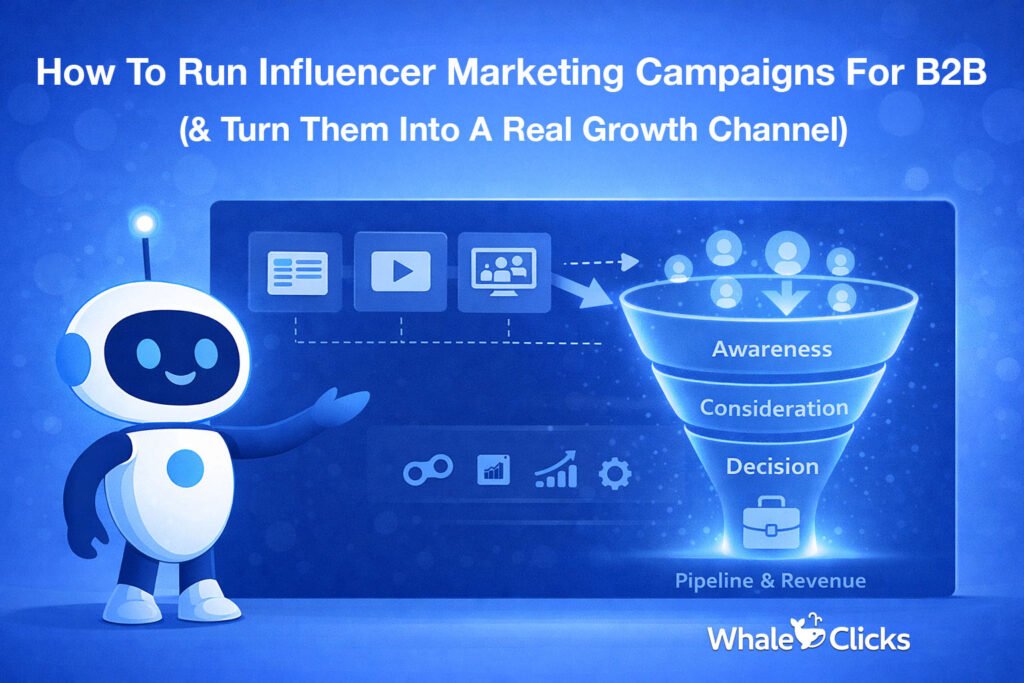
Why Everyone Thinks Influencer Marketing Is Only for B2C
The big misunderstanding that influencer marketing is only for B2C comes from confusing visibility with trust. Consumer influencer marketing sells aspiration. B2B influencer marketing sells confidence. A skincare B2C influencer promises glowing skin. A SaaS B2B influencer explains how your SaaS tool reduced deployment failures. One is B2C lifestyle. The other is B2B risk reduction that helps drive sales and retention.
B2B purchases can be career-defining decisions, and buying cycles are long. Nobody wants to be responsible for choosing the wrong SaaS platform or vendor. B2B buyers naturally look for validation from experts in the field who already understand their problems, and those experts are influencing B2B buying decisions every day, whether brands participate or not.
If you work in SaaS, you see it constantly: A RevOps expert who posts about attribution models. A B2B growth marketer guru that breaks down funnel benchmarks. A cybersecurity expert who reviews new cloud security tools. These voices do not feel like advertising. They feel like guidance. Their recommendations travel across your target customer’s Slack channels, internal meetings, and procurement conversations, and by the time a sales call happens, a shortlist already exists based on what these influencers are saying about your brand and service.
The Quiet Explosion of B2B Influence
The B2B buying journey has changed dramatically. B2B decision makers now complete most of their research independently. They watch videos, read posts, join communities, and attend webinars long before they fill out your demo form. And by the time they speak to your sales team, they already trust certain brands and distrust others.
Consider SaaS. Entire LinkedIn ecosystems exist around topics like product-led growth, revenue operations, and marketing attribution. A handful of SaaS experts appear repeatedly in YouTube podcasts and LinkedIn posts. Their opinions shape how companies evaluate tools and vendors.
Now consider industrial sectors. The pattern is identical but quieter. A YouTube channel reviewing manufacturing equipment can influence procurement decisions. A niche newsletter read by a logistics manager can shape vendor shortlists. The audiences may be smaller but infinitely more targeted. Ten thousand decision makers in a specific industry are more valuable than millions of casual viewers.
B2B influence is real. It is simply more subtle and highly specialized.
Why Most B2B Influencer Campaigns Fail
Many companies treat influencer marketing as a form of brand awareness or PR. They sponsor a webinar, pay for a mention, celebrate impressions, and then stop because they cannot prove ROI. This is the same mistake businesses made with paid media years ago, before conversion tracking matured.
Influencer marketing becomes powerful the moment you treat it like a performance channel. So, instead of asking how many people saw your LinkedIn post, the question should be “how many qualified buyers moved closer to a purchase after reading our post or watching our video?” Instead of paying for exposure, B2B brands need to invest in influencer content that can deliver measurable movement through their sales funnels.
Running Influencer Marketing Like a PPC Channel
A well-run PPC campaign should be focused on predictable outcomes (more conversions, more sales). Influencer marketing needs the same focus. The goal is not reach. The goal is pipeline.
A well-managed B2B influencer campaign should begin with your sales funnel, not with the influencer. The biggest mistake brands make is searching for the largest creators first, but the real question is where your sales funnel needs support. Awareness (top of funnel) requires educators who explain industry problems. Consideration (mid-funnel) requires technical experts to compare solutions. Decision stages (at the bottom of the funnel) require trusted voices to validate vendors.
This mirrors keyword strategy in Google Ads. Not every keyword matters. Only the ones aligned with intent matter. B2B influencer marketing needs to work the same way.
Why Micro-Influencers Win in B2B
B2B influence rarely comes from massive audiences. It comes from relevance and credibility. A cybersecurity specialist with twenty thousand followers can generate more pipeline than a generic tech creator with half a million. What matters is audience precision and trust density.
B2B influencer marketing resembles account-based marketing more than consumer advertising. You want creators whose audiences mirror your ideal customer profile with surgical accuracy. A RevOps consultant for marketing automation platforms. CFO creators for finance software. Engineers for industrial tools, and so on.
This is targeted influence, not mass appeal.
Designing B2B Influencer Campaigns That Match Buyer Journeys
Successful B2B influencer collaborations should look and feel like natural extensions of the creator’s content. Product walkthroughs, technical deep dives, webinars, and case studies work because they help buyers make informed decisions. In B2B, content is not disposable; it has a long shelf life, appears in search results, and circulates inside organizations long after publication.
This longevity gives B2B influencer marketing a compounding effect. One collaboration can influence dozens of your future buying conversations.
Tracking B2B Influencer Campaigns Like a Performance Marketer
Measurement is where growth begins. Every B2B influencer campaign should use UTM parameters, dedicated landing pages, CRM attribution, and offline conversion tracking. Businesses must set up proper tracking to identify which creators generated leads, which leads became opportunities, and which opportunities became revenue.
When your B2B influencer marketing connects to your sales pipeline, it stops being experimental and becomes scalable.
Optimization naturally follows. Companies learn which creators produce high-quality leads, which messaging resonates, and which formats convert best. The process mirrors how PPC evolved from guesswork into a predictable growth engine.
The Content Multiplication Effect
One of the most overlooked benefits of B2B influencer marketing is content multiplication. A webinar becomes a YouTube video, a LinkedIn clip, an ad, a landing page, and a nurture email. Suddenly, your B2B influencer marketing is feeding your entire content ecosystem.
This multiplication accelerates every other channel. Paid ads convert better when prospects recognize your brand. Sales calls improve when buyers already trust your positioning. SEO strengthens when authoritative voices mention your company.
Trust compounds across channels.
Budget Expectations and Long-Term ROI
B2B influencer marketing should be tracked like PPC, but it works more like SEO: early collaborations first build awareness and credibility. Later campaigns build familiarity, and eventually, a predictable pipeline emerges. Over time, the trust you’re generating among your target customers increases sales and drives your CPA down.
The Future of Influencer Marketing in B2B Growth
Influencer marketing does not replace PPC or SEO, but it helps amplify them. PPC ads capture demand, SEO nurtures that demand, and B2B influencers help deliver trust that closes sales.
Companies that embrace this shift early will grow faster, acquire customers more efficiently, and build brands that buyers trust before the first sales call. This is the real power of B2B influencer marketing. It does not just generate leads. It changes the conversation and builds trust before the lead even exists.
Why This B2B Influencer Marketing Matters Right Now
Organic reach is declining, and paid media costs continue rising. Buyers trust advertising less every year. At the same time, expert B2B creators are gaining influence rapidly. The brands that collaborate with them early will shape the conversation in their industries.
The ones who wait will pay more to catch up.
How WhaleClicks Helps Brands Turn B2B Influence Into Revenue
At WhaleClicks, B2B influencer marketing is treated as a full-funnel performance channel. Creators are selected based on audience alignment, campaigns are designed around the buyer journey, and tracking is integrated directly with your CRM and analytics platforms. The focus is not on impressions or vanity metrics; it’s on pipeline and revenue.
Contact Whale Clicks today to get your B2B influencer marketing campaigns started.